Sponsored · In partnership with Safe-Bricks Limited
Understanding Bungaroosh: Why Brighton's Victorian Properties Need Specialist Repair
A guide to diagnosing and restoring this distinctive heritage building material found across East Sussex.
If you own a Victorian or Edwardian property in Brighton, Hove or the surrounding East Sussex area, there is a reasonable chance your walls contain bungaroosh. Few homeowners recognise the name, yet this material sits at the heart of countless heritage building problems across the region. Understanding what it is, why it deteriorates, and how to repair it properly can save you from costly mistakes and help preserve the character of your home.
What is Bungaroosh?
Bungaroosh is a composite building material that consists of a mix of lime mortar, brick rubble, flint, chalk and other local aggregate. It was commonly used in the 19th century as a fill material between the outer and inner brick skins of cavity walls, or as the primary wall material itself in some properties. The name itself derives from Indian construction traditions, reflecting the practical engineering approach of the era.
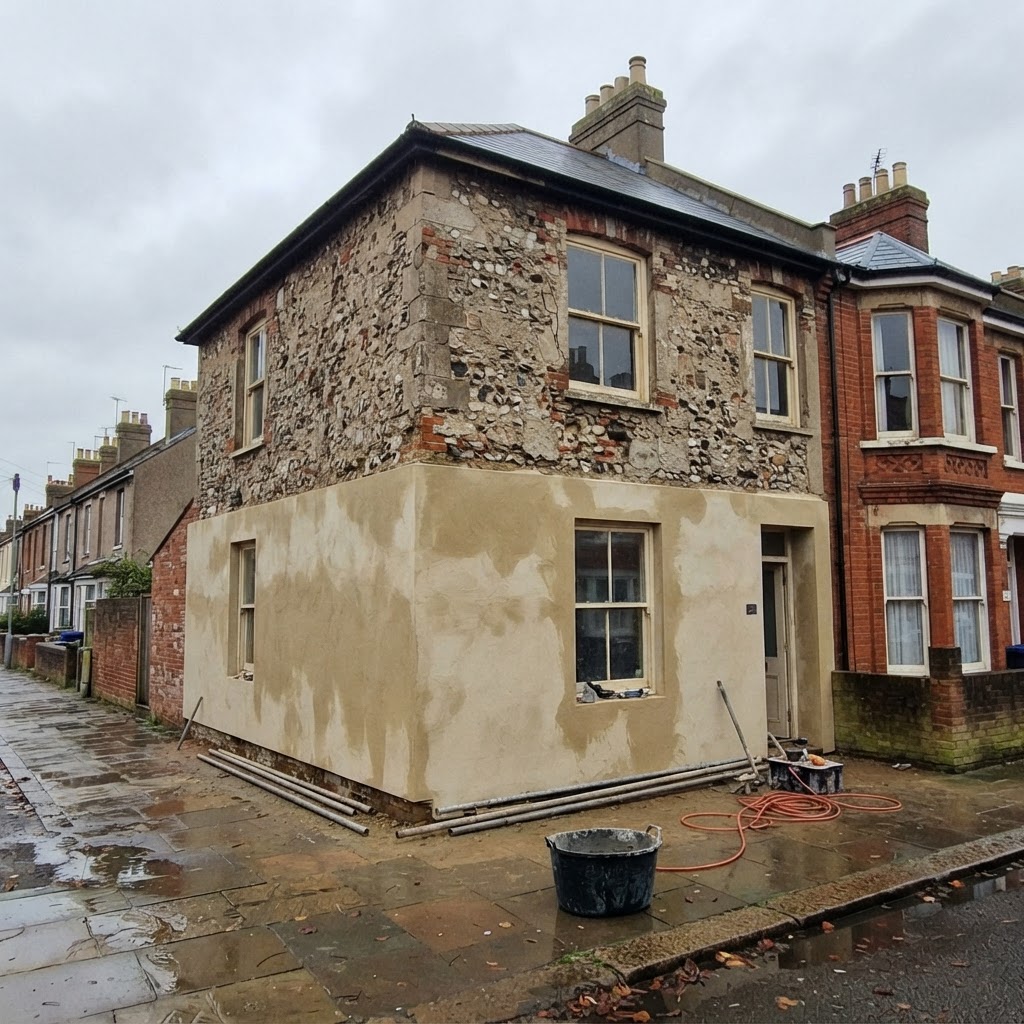
In Brighton and the surrounding areas, bungaroosh appears most frequently in the render and infill of Victorian terraced houses and larger villas built between the 1850s and 1920s. It offered builders an economical way to achieve thermal mass and structural stability using locally sourced waste materials. The outer brick facade was often relatively thin, with the bungaroosh core doing much of the structural work behind it. On many properties, you can identify bungaroosh where the render has failed or where patches have been exposed during renovation work. The material looks distinctly mottled, with visible flint, brick fragments and lime matrix.
Why Bungaroosh Fails
Bungaroosh performs reasonably well when kept dry and maintained properly. The problem arises when water penetrates the outer protective layer. Unlike modern cavity insulation or solid brick walls, bungaroosh acts as a sponge. Once moisture enters through failed render, damaged brickwork, or poor pointing, it saturates the material and travels downward and sideways within the wall structure.
Several factors accelerate deterioration in Brighton's maritime climate. Rising damp from below can wick moisture up through the bungaroosh core, especially in older properties where damp-proof courses are absent or have failed. Driving rain on exposed elevations is common along the south coast, and any cracks in the render allow water ingress. As moisture accumulates, the lime mortar within the bungaroosh weakens. Frost action during winter causes the material to spall and crumble. Salt from the air and ground chemically attacks the lime binder, leaving behind a weakened, friable mass.
When bungaroosh begins to fail, the symptoms often include bulging outer walls, internal damp patches that refuse to dry, crumbling render, and loose brickwork. Many homeowners mistake these signs for structural failure of the entire building, when in reality the problem is localised water management and deterioration of the infill material.
Heritage Property Repairs Require Understanding
Repairing bungaroosh is not straightforward, and inappropriate interventions can cause far greater damage than the original problem. The material is fundamentally different from modern cavity insulation or solid brick masonry, so standard repair approaches often fail.
The render is the protective skin. If bungaroosh is exposed to the weather without good render coverage, it will continue to fail. However, applying modern cement-based render directly onto bungaroosh is counterproductive. Cement render is inflexible and impermeable, creating a moisture trap that accelerates deterioration of the historic material beneath. Trapped water has nowhere to evaporate, and the harder cement render eventually cracks and fails, allowing water deep into the wall again.
Proper repair relies on compatible materials. Heritage property restoration specialists working with bungaroosh use breathable, lime-based renders that allow moisture to evaporate slowly without trapping water within the wall. The render must be applied to a prepared surface, and underlying bungaroosh that is too soft or compromised may need partial replacement with compatible lime mortar and aggregate matching the original composition. This is painstaking work requiring knowledge of traditional building practices.
Damp control is essential. Simply repairing render on a rising damp problem will not succeed. Bungaroosh repair specialists in Brighton must assess the full picture: is there a failing damp-proof course, poor drainage around the property, or damaged guttering driving water into the walls? Once the source of moisture is identified and managed, the bungaroosh repair can proceed with confidence.
Working with Specialists
Bungaroosh repair specialists understand the specific challenges of East Sussex heritage properties. They can diagnose whether problems stem from moisture ingress, structural movement, or material degradation. They select appropriate lime mortar mixes that match the original bungaroosh composition as closely as possible. They know when partial repointing or infill replacement is necessary, and when render recoating will suffice.
The cost of bungaroosh repair varies widely depending on the extent of damage, the size of the affected area, and the complexity of accessing the wall. A small localised render failure might cost a few hundred pounds to address, while extensive remedial work affecting multiple elevations could run into thousands. The investment depends on the scale of deterioration, but delaying repair typically makes problems worse and more expensive to fix later.
Brightness, Hove and the wider region contain numerous examples of properties where careful bungaroosh restoration has preserved Victorian character whilst securing the building against future water damage. These successes share a common thread: they were carried out by specialists who understood the material rather than applying generic masonry repair techniques.
Get in Touch
If you suspect bungaroosh in your Brighton or East Sussex property, or if you are seeing signs of dampness, bulging walls or render failure, it is worth seeking specialist advice. Visit Safe-Bricks Limited to discuss your heritage property's needs with professionals experienced in traditional building repair and Victorian house restoration across the region.
About the business
Safe-Bricks Limited
Heritage building and repair specialists in Brighton.
- Areas covered
- Brighton, Hove
- Phone
- 07459 174692
- info@safe-bricks.com
More about Safe-Bricks Limited
- Lime Render vs Cement: Why Breathable Solutions Matter for Period Homes
- Understanding Bungaroosh: Brighton's Historic Building Material
- Victorian Property Restoration: How to Fix Damp Without Damaging Your Home's Heritage
- Navigating Listed Building Consent in Brighton & Hove: A Guide to Heritage Property Restoration
Share this feature
Post it to your own pages in one click, each button opens that site’s share screen in a new tab. The Instagram and TikTok buttons copy your caption and link ready to paste into a new post.