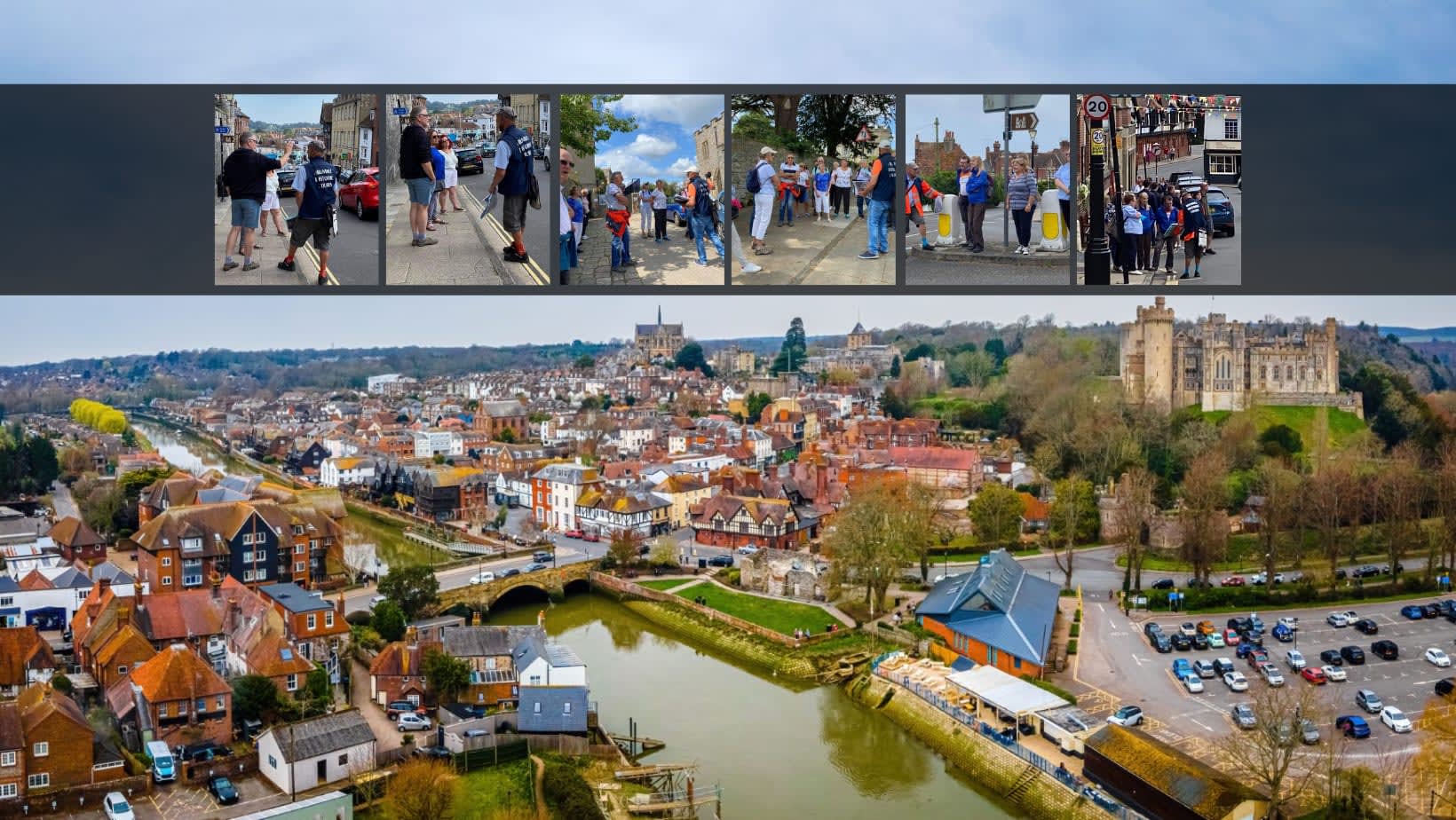
Sponsored · In partnership with Arundel Historic Town Tours
Arundel Castle and Cathedral: What the Tours Reveal
Discover the Norman fortress and Victorian cathedral that shaped a South Coast town.
Arundel is one of the most historically layered towns on the Sussex coast, and its two most imposing landmarks tell very different stories. The castle rises from its motte, a symbol of Norman power established in 1067, whilst the cathedral stands as a bold 19th century statement of faith and ambition. Walking through Arundel with someone who knows the place well reveals how these two structures shaped not just the town's skyline, but its entire character.
The Norman Castle: A Thousand Years of Stone
Arundel Castle has dominated the landscape since William the Conqueror's forces established a stronghold here in 1067. The mound on which it stands was built within months of the Norman invasion, a deliberate show of military authority over the newly conquered territory. What visitors often don't realise is that the castle wasn't built in a single phase. The keep you see today, with its distinctive round tower, dates from the 11th and 12th centuries, but the Normans were constantly adapting and strengthening their position.
The architecture tells a story of practical military design. The motte, or artificial mound, served a clear purpose: it elevated the castle above the surrounding landscape, making it visible for miles and giving defenders a vantage point. The bailey, or outer courtyard, would have been surrounded by wooden palisades initially, later replaced with stone walls. Those stone walls are what remain today, weathered by centuries but still substantial.
Guided tours of Arundel's castle explore the keep's interior layout, explaining how a relatively compact space was made to serve multiple functions. The lower levels would have stored supplies and weapons. The higher chambers, warmed by fireplaces and lit by narrow windows, were where the lord and his family lived. These weren't comfortable apartments by modern standards, but they represented power and status.
One detail that brings the castle alive is understanding its role beyond warfare. Arundel Castle was also an administrative centre. From here, local disputes were settled, taxes were collected, and the Norman lord's authority over the surrounding parishes was enforced. For nearly a thousand years, this has been the seat of the Dukes of Norfolk, one of England's most significant aristocratic families. That continuity is rare among English castles, and it means the building has been continuously maintained and adapted rather than abandoned or left to ruin.
The Cathedral: Victorian Ambition in Stone
If the castle represents Norman conquest, the cathedral represents something quite different: 19th century Catholic confidence and architectural ambition. Begun in 1873 and completed in 1961, Arundel Cathedral of Our Lady and St Philip Howard is one of the finest Victorian Gothic Revival buildings in England.
The story behind the cathedral is bound up with the history of English Catholicism. The Dukes of Norfolk were among the few major Catholic families to retain power and land after the Reformation, and Arundel became a quiet centre of Catholic faith through centuries when that faith was officially discouraged. By the Victorian era, Catholic emancipation had opened the door for public worship, and the 15th Duke of Norfolk decided to build a cathedral worthy of the faith and the town.
The architecture is striking. The cathedral's design draws on medieval precedents, with its soaring nave, pointed arches and ribbed vaults. But it's unmistakably 19th century in its scale and ambition. The interior is light and spacious, quite different from many darker medieval churches. The use of pale stone and large windows creates an almost ethereal quality that was deliberately chosen to convey aspiration and openness.
Walking tours that include the cathedral point out specific architectural features that matter. The roof is notable for how it spans the wide nave without internal supporting columns, a feat of Victorian engineering. The stained glass, added over several decades, represents different artistic periods and tells various religious stories. The floor plan itself is worth understanding: the cathedral was built with a long nave intended for public worship, flanked by side chapels dedicated to particular saints or families. This arrangement reflects Victorian thinking about how worship should be organised and experienced.
What the Tours Connect
Arundel's guided history tours work best when they link these two buildings together. They stand within sight of each other, yet represent utterly different eras and different responses to power and belief. The castle demonstrates how military might and administrative authority were expressed through architecture in the medieval world. The cathedral shows how wealth and faith combined to create something meant to inspire and uplift.
The relationship between the two also reveals something about Arundel itself. The castle attracted the Norman lords and their descendants. The cathedral was built by those same families, now expressing their faith publicly rather than merely symbolising military power. The High Street and surrounding streets developed in the shadow of both, creating a medieval street plan that remains largely intact today.
Local guides who know Arundel's history can explain the details that make each building more than just an impressive structure. They discuss the engineering challenges faced by medieval builders, the costs involved in maintaining such vast buildings, and the local stories of the people who lived and worked around them. They also point out the ways Arundel has changed: the parts of the town that have grown up around these monuments, the businesses that have traded here, and how residents have adapted to living alongside such significant historical sites.
Walking through Arundel with someone knowledgeable transforms what might otherwise be a casual tour into something more rewarding. You begin to understand not just what the buildings are, but why they matter and what they tell us about the past.
Get in Touch
If you'd like to explore Arundel Castle and Cathedral with local expertise, Visit Arundel Historic Town Tours to find details of the walking tours available. You can also keep up to date with information about Arundel's history tours on Facebook.
About the business
Arundel Historic Town Tours
Guided historic tours of Arundel.
- Areas covered
- Arundel, West Sussex
- Phone
- 07443 896480
More about Arundel Historic Town Tours
Share this feature
Post it to your own pages in one click, each button opens that site’s share screen in a new tab. The Instagram and TikTok buttons copy your caption and link ready to paste into a new post.