Sponsored · In partnership with Garden Project Design
Chalk and Character: Designing Gardens That Thrive in Sussex Downland Soil
How to work with chalky soils around Haywards Heath and Ditchling, not against them.
If you garden anywhere across the Mid-Sussex Downland, from Hassocks to Ditchling and beyond, you will have encountered chalk soil. It is pale, sticky when wet, and drains water away almost as fast as it arrives. Many gardeners see it as a problem to solve. The truth is rather different: chalk soil supports a particular palette of plants that flourish nowhere else, and understanding how to work with it opens up genuine possibilities for a thriving garden.
Understanding Your Chalky Downland Soil
Chalk soil is fundamentally alkaline, with a pH typically between 7.5 and 8.5. This matters because it determines which nutrients are available to plants and which are locked away. Iron and manganese, essential for healthy foliage, become less accessible at higher pH levels. Magnesium behaves similarly. The drainage characteristics are distinctive too: chalk soil drains rapidly in summer, often leaving plants thirsty, yet compacts into an airless mass when wet, which can suffocate root systems. The soil tends to be shallow as well, sitting above solid chalk bedrock that roots cannot penetrate.
These are genuine constraints, but they are not insurmountable. The chalk itself moderates soil temperature, keeping roots cooler in summer than they would be in acidic clay. The alkalinity creates conditions that suit a remarkable range of plants, many of which are native to the English Downland and evolved specifically for these soils. Rather than fighting the chemistry, the most successful approach is to select species that naturally thrive here and amend the soil thoughtfully to improve its structure and water-holding capacity.
Selecting Plants for Chalk Conditions
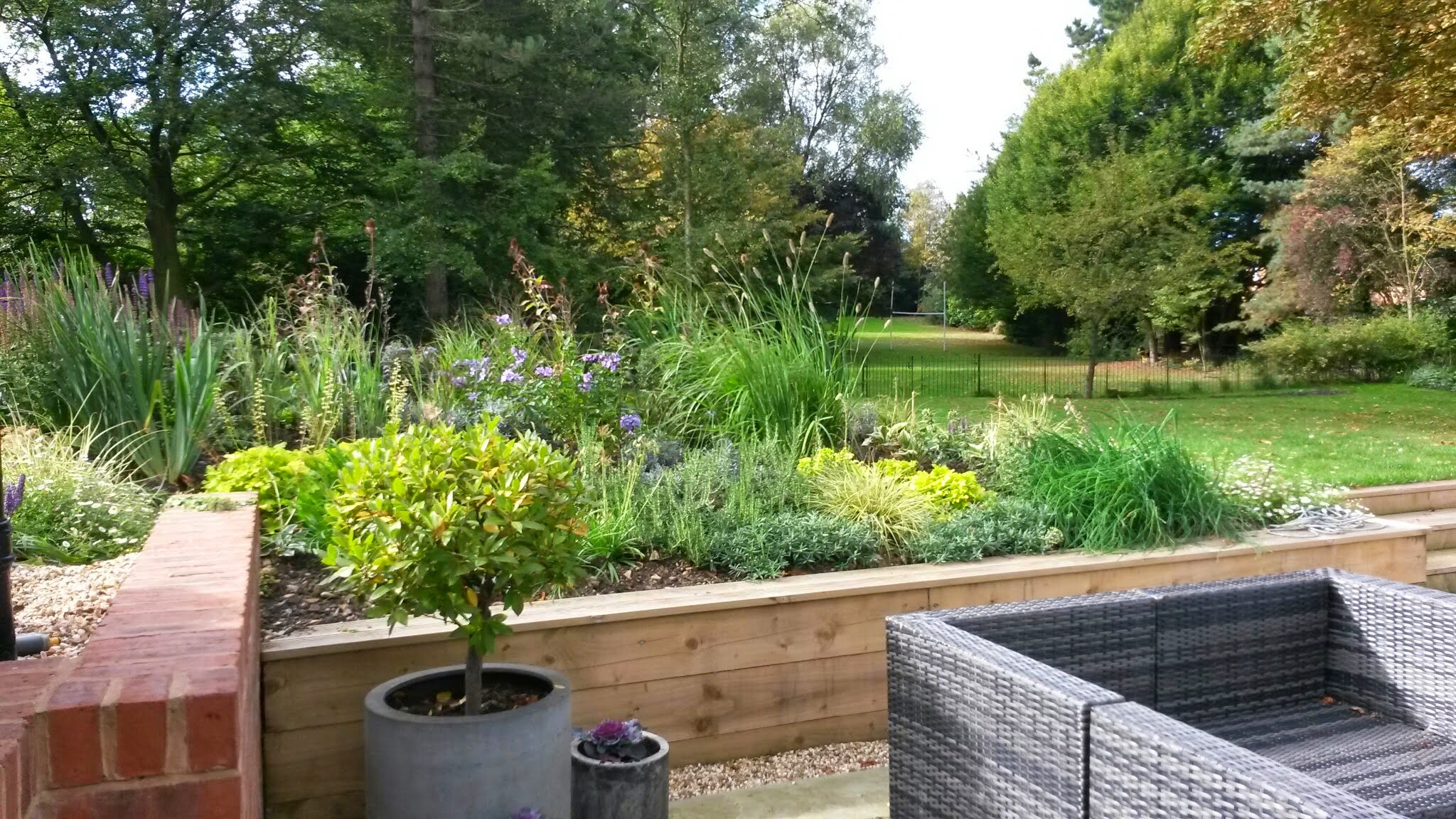
Native species and naturalistic planting options form the backbone of a garden that performs well on chalk whilst supporting local biodiversity. Hawthorn, blackthorn, dogwood and wayfaring tree all flourish and provide food for insects, birds and small mammals. For perennials, plants like salvia, scabious, marjoram, bird's-foot trefoil and agrimony do not merely tolerate chalk; they positively excel on it. These are the plants you encounter on the Downland walks around Ditchling Beacon and the South Downs, thriving without intervention.
If you prefer a slightly wider palette, many Mediterranean and southern European plants grow exceptionally well on chalk soils because they evolved in similar conditions. Lavender, catmint, santolina, cistus and germander all thrive in alkaline, free-draining conditions. They dislike being waterlogged far more than they mind the lack of acidity. Ornamental grasses such as stipa and festuca add texture and movement whilst asking very little of the soil. For shrubs, consider rosemary, sage, santolina and the ornamental spiraea. These selections perform strongly precisely because they are matched to your soil, not imposed against it.
Shaded areas can feel more challenging, but hellebores, euphorbias, beech, holly and yew all tolerate chalk well. Ivy, particularly common ivy, grows vigorously in chalky conditions and provides winter interest and shelter for wildlife. Woodland bulbs like snake's head fritillary and autumn crocus appreciate the free drainage.
Soil Improvement and Preparation
Whilst accepting your chalk soil's character is sensible, improving its structure pays real dividends. Adding organic matter is the most practical step. Compost, well-rotted manure, leafmould and other organic amendments improve water retention, create better growing conditions for microbes and fungi, and gradually improve soil structure as they break down. Chalk soil typically contains little organic matter naturally, so this is not a nice-to-have but genuinely important.
Apply a generous mulch of compost or leafmould each autumn, aiming for at least 5 centimetres. This moderates temperature swings, suppresses weeds and gradually incorporates into the soil. Over time, this builds a darker, more friable upper layer that retains moisture far better than bare chalk.
For planting, dig a hole and backfill with a mix of your native soil and added compost, roughly 50:50. This creates a transition zone that helps new plants establish. Water thoroughly at planting time and in the weeks after, as chalk soil's free drainage means newly planted specimens can dry out quickly despite adequate rainfall.
For nutrients, chalk soil can present challenges with trace elements. A balanced, slow-release fertiliser applied in spring supports healthy growth. Foliar feeds, applied directly to leaves, bypass the soil chemistry issue and are particularly useful for plants showing signs of iron deficiency (yellowing between leaf veins). Avoid excessive feeding, which encourages soft growth that struggles in exposed positions.
Creating a Resilient Garden on Chalk
The most resilient gardens on chalk tend to be those that embrace the conditions rather than fighting them. This means choosing plants suited to your soil, spacing them appropriately so air circulates and diseases find fewer footholds, and building soil structure gradually rather than expecting instant transformation. Naturalistic planting design, where plants are grouped according to their shared growing preferences, works particularly well on chalk because you are working with the land's existing character.
Successful chalky soil gardens across Sussex demonstrate that this terrain, far from being a limitation, allows you to create something distinctive and genuinely low-maintenance once established. The plants thrive because they belong there. Wildlife finds abundant food and shelter in native species and their ornamental cousins. And the work required to maintain the garden diminishes over time as plants establish deeper roots and soil structure improves.
When planning or redesigning your garden, the question is not how to overcome your chalk soil but how to harness it. That shift in perspective transforms what seemed like an obstacle into the foundation of a garden that looks natural, performs reliably, and requires less intervention than any amount of imported topsoil and difficult plant choices ever would.
Get in Touch
If you would like practical advice on designing a garden that suits your chalky Downland soil, Visit Garden Project Design to explore how sustainable garden design can work with your local conditions. Whether you are working on chalk around Hassocks, Ditchling or elsewhere in Sussex, starting with soil understanding and plant selection that matches your site creates gardens that thrive naturally.
About the business
Garden Project Design
Wildlife-friendly garden design.
- Areas covered
- Brighton, Hove
- Phone
- 07772 074402
More about Garden Project Design
- The Complete Guide to Garden Design in Brighton & Hove
- Keeping Brighton Gardens Thriving: A Seasonal Maintenance Guide for Year-Round Vitality
- Growing Green: How Native Plants Transform Brighton Gardens into Wildlife Havens
- Growing Green by the Sea: How One Garden Designer is Solving Brighton's Coastal Challenge
Looking for more local firms? Browse Plumbers in Brighton & Hove →
Share this feature
Post it to your own pages in one click, each button opens that site’s share screen in a new tab. The Instagram and TikTok buttons copy your caption and link ready to paste into a new post.