Saving Brighton's Crumbling Walls: Inside the Specialist Trade of Bungaroosh Repair
Walk through the leafy streets of Kemptown or along the Regency terraces of Hove, and you're surrounded by some of England's most distinctive Victorian and Georgian architecture. But beneath the elegant facades of these beloved period homes lies a construction secret that most homeowners—and most builders—don't understand. The walls aren't solid brick. They're bungaroosh: a peculiar, rather haphazard mix of lime mortar, flint, pebbles, broken brick and whatever rubble came to hand when these houses were built two centuries ago. And right now, many of them are in serious trouble.
The problem isn't age. Bungaroosh, when treated correctly, can last for centuries. The crisis is that it's being repaired incorrectly—often by well-meaning general builders who apply modern cement and plastic-based coatings that actually accelerate the decay they're meant to prevent. This is where Safe Bricks Limited comes in. Specialising in the restoration and repair of bungaroosh walls and lime rendering across Brighton and Hove, the firm has quietly become essential to preserving the city's architectural heritage, one crumbling facade at a time.
Understanding Brighton's Most Misunderstood Building Material
Bungaroosh is, by any rational assessment, a bizarre material. It sounds like the sort of thing a builder might have invented on a particularly chaotic Monday morning—whatever was lying around the site, mixed with lime, stuffed into walls and left to set. And in many ways, that's exactly what it was. But it worked. For Georgian and Victorian builders working in seaside towns like Brighton, bungaroosh was economical, reasonably durable, and perfectly adapted to the damp, salty environment of the coast.
The genius lies in breathability. Bungaroosh walls allow moisture to move through them—to evaporate from the surface rather than accumulating inside where it causes serious structural damage. The lime mortar that binds the material is softer and more flexible than modern cement, allowing slight movement without cracking. The flint and pebbles provide local thermal mass. For their time and place, these walls were actually quite clever.
But here's the trap that catches so many modern homeowners. When cracks appear, when damp patches emerge, or when render begins to fail, the instinct is to "fix" the problem with what seems like stronger, more modern material. A contractor arrives, sees crumbling lime mortar, and recommends cement pointing. The owner worries about damp, so they specify a waterproof paint or plastic-based render. The wall looks better for a year or two. Then it starts to bulge. Cracks race across the surface. Internal walls weep with moisture. The "cure" has become the disease.
"It's one of the most common mistakes we see," explains the team at Safe Bricks. "People apply these impermeable coatings thinking they're protecting the wall. In reality, they're trapping moisture inside, where it does far more damage than it would if it could simply evaporate. You end up with rising damp, blown plaster, damaged brickwork, and a building that's actually in worse condition than before."
The Right Way to Rescue Bungaroosh
There's a reason Safe Bricks specialises so narrowly in bungaroosh repair rather than offering general contracting services. The work demands genuine expertise. Diagnosis, for instance, requires understanding how the wall has failed and why. Is the damage caused by failed previous repairs? Has the external render blown? Is rising damp the root cause, or a symptom? Different problems demand different solutions, and applying the wrong one can make things worse.
When Safe Bricks takes on a bungaroosh repair project, the first step is always careful investigation. The team looks for what previous contractors have done, examines the pattern of cracks, assesses moisture levels, and considers the building's exposure to the elements. Only then do they develop a repair strategy.
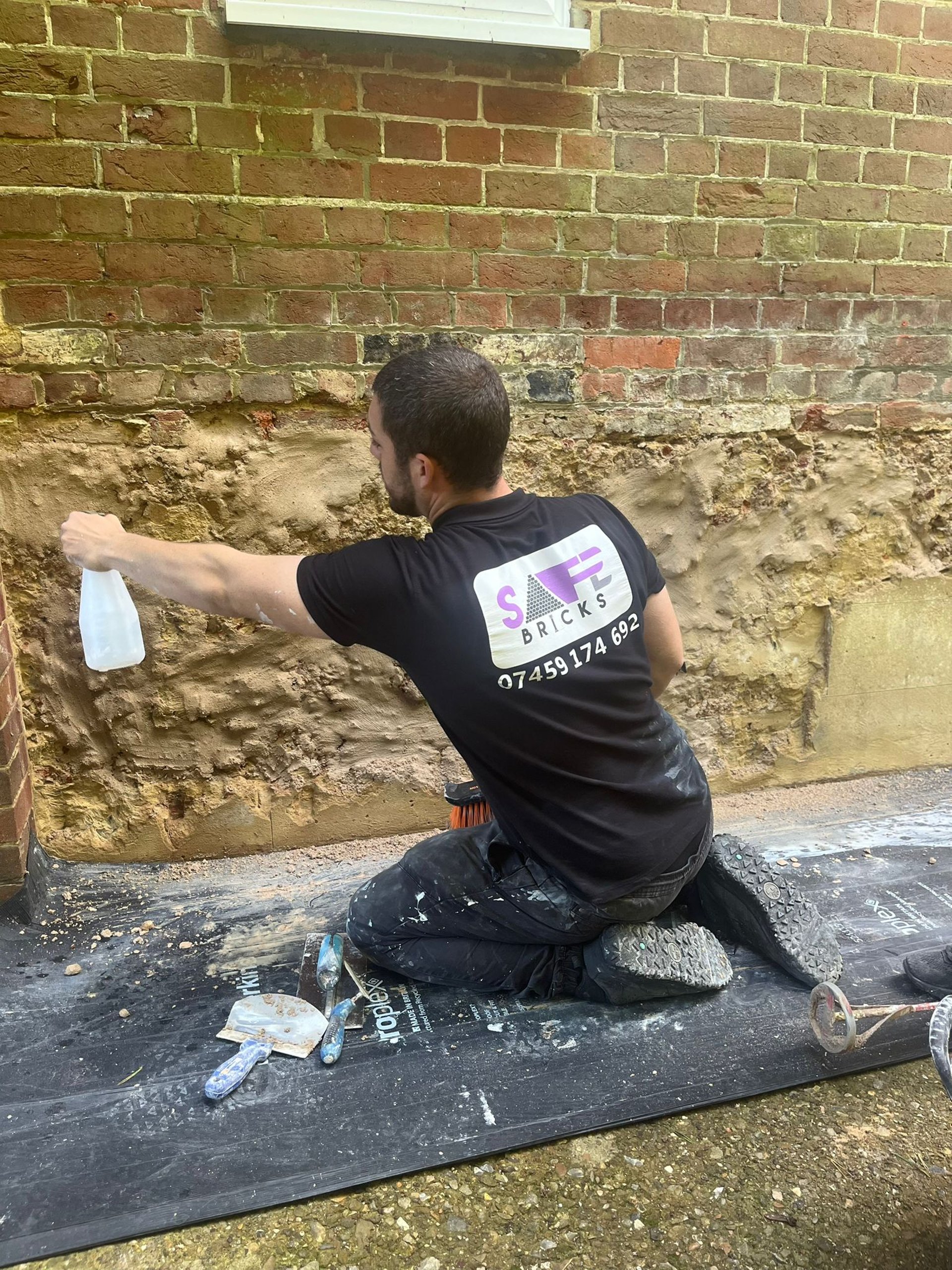
The work itself involves returning to the original principles that made bungaroosh successful in the first place. Failed cement patches are carefully removed. New lime mortar, mixed to traditional recipes that match the original material, is used to rebed loose brickwork and fill voids. Where structural movement is an issue, lime mortar is applied with careful crack-stitching techniques that allow controlled movement. For external protection, breathable lime renders are applied by hand, finished to either traditional textures or contemporary smooth profiles depending on the property's character.
Internally, the same philosophy applies. Modern gypsum plasters, which seal in moisture, are replaced with lime plaster that allows walls to breathe. Lime skim coats are applied to cracked or failing surfaces. The result isn't just cosmetic—it's a wall system that actually functions as it was designed to function, back when these buildings were new.
This is painstaking, skilled work. It requires bricklayers and plasterers who understand not just how to apply materials, but why lime behaves differently from cement, how to read the signs of structural movement, and how to make decisions on site when conditions don't match the textbook. It's why Safe Bricks won the Home Builder Awards for Best Heritage Construction Specialists 2026—recognition of expertise that's rare in an industry increasingly dominated by standardised, one-size-fits-all approaches.
Why Brighton Needs Specialists Now More Than Ever
Brighton and Hove's housing stock is aging. The Georgian and Victorian properties that give the city much of its character are now 150 to 250 years old. Many are reaching critical points where major repairs can't be deferred. Simultaneously, there's growing awareness of the damage that inappropriate repairs have caused—cracked facades, damp interiors, structural instability.
The conservation movement has helped. Listed Building Consent requirements mean some properties are protected by regulation. But many bungaroosh properties are unlisted, leaving their fate in the hands of individual homeowners and the contractors they choose. This is where education matters. Safe Bricks publishes detailed guides on their website explaining bungaroosh, heritage property restoration, and the Listed Building Consent process—freely available information designed to help homeowners understand what they should be looking for when commissioning repairs.
There's also the broader environmental argument. Properly maintained historic buildings consume far less energy than modern replacements, and they have enormous embodied carbon already accounted for. Saving Brighton's bungaroosh houses isn't just about preserving beauty or history—it's about sustainability.
Get in Touch
Safe Bricks Limited specialises in bungaroosh and lime render repairs across Brighton, Hove, and the South Coast. For advice on heritage property repairs, lime rendering, or bungaroosh wall assessment, you can contact them at 07459 174 692 or info@safe-bricks.com. Visit safe-bricks.com for detailed guides on heritage property restoration and conservation techniques.